Showing posts with label food. Show all posts

Monday, November 7, 2022

Pizza? I'd Like Mine Plain, Please - Monday Memory


My father worked turns at the steel mill when pizza was a  new-to-us food in the mid-1950s.  My sister had persuaded Dad to stop at a pizza shop to buy a pizza one Friday night on his way home from work.  He didn't usually get home until at least 11:30 but stopping for pizza meant his getting home after midnight.  (We were not a family of night owls.)  I have no idea how my sister learned about a pizza place in a city that was so far from our little village.

My usual bedtime when I was five or six was probably 8:30 or 9:00, even on Fridays and Saturdays.  I was asleep when Dad arrived home that night, but my family, not wanting me to miss this new experience, woke me eat pizza. 

Maybe I would have liked it had I been more awake when it arrived, but I doubt it.  It had sauce, pepperoni, and cheese, as well as other toppings, probably onions, mushrooms, and peppers, and maybe olives.  I was a picky eater, not to mention the fact that I'd never eaten pepperoni or mushrooms and didn't like peppers or olives.  What a mess of a combination of foods it was.  I scraped off all the toppings including the cheese and ate the crust with whatever sauce I couldn't scrape off.

And then I went back to bed, totally unimpressed with pizza.

It was a number of years before I remember eating pizza again.  Probably at the encouragement of my sister, my mom bought a box of Chef Boyardee, sold with everything included to make a simple, plain pizza:  dough mix, sauce in a can, and Parmesan cheese in a pouch.  Getting the dough spread out to cover the whole pan was a challenge.  And, well, it was plain.

Even later, around the time I was 16, our small, local grocery store, Beazel's, sold ready-made pizzas in plastic bags -- just take them home and bake them.  My mom bought several when I had a few friends over for my 16th birthday.

By the late 1960s, pizza restaurant had become common.

These days I order pizza with pepperoni, mushrooms, and sausage.

Do you have early memories of trying new foods, or the first time you ate pizza?

—Nancy.

Copyright © 2022 Nancy Messier.  All Rights Reserved. 
Do not copy or use any content from this blog without written permission from the owner. 

.

Monday, August 22, 2022

Pistachios - Monday Memory

Photo courtesy of
jtlewis, StockFreeImages.com

I first learned about pistachios from my brother, Bob, who was (and still is) 11 years older than me.  While in high school in the 1950s he worked at Beazel's, Mineral Ridge's only grocery store.

One afternoon when I was perhaps 7 or 8, we were driving to I don't remember where when he pulled into Beazel's parking lot and told me to wait in the car.  (You have to understand that this was a small town--a village, really--in the 1950s, when kids waited in cars without parents or older brothers being concerned.) 

Bob walked out of the store a few minutes later with a clear bag with something red in it.  He told me they were pistachios, a kind of nut, and offered me some to try.  Oh my goodness, I loved them immediately.  They were delicious and I think we finished the bag.  If you've ever eaten red pistachios you probably remember how they turned your fingers red.  It seemed strange but I never asked why.

Though I loved them, they weren't something I spent my money on.  What little money I had came from my allowance and mostly went to buy either ice cream cones in the summer, or M&Ms.

It wasn't until years later, as a young adult, that I rediscovered pistachios at a health food coop.  I was surprised that they weren't red but pleased that they were as delicious as I remembered. 

They've become one of my favorite snacks and these days I spend my money on them--and shun M&Ms..
.
Did you eat red pistachios as a kid?

I anticipate that Monday Memory posts will become an irregular series focusing on my childhood and young adult memories.  If you are a child of the 1950s, perhaps you will identify with some of the memories I share.

-–Nancy.

Copyright © 2022 Nancy Messier.  All Rights Reserved. 
Do not copy or use any content from this blog without written permission from the owner. 

.

Saturday, May 8, 2021

Hannah Glasse of Northumberland and Her Recipe for Plague Potion

I hope you enjoy this presentation by Hannah Glasse from the Northumberland Archives.


Hannah was the author of the 1747 cookbook, The Art of Cookery Made Plain and Easy Which far exceeds any Thing of the Kind ever yet Published, which was republished into the 1800s and again in the 21st century.  I particularly enjoyed this video of Hannah with her delightful accent as she shared a few cookery tricks from the mid- to late-1700s.  And who of us wouldn't benefit from her plague potion during these Covid times?  Based on my knowledge of the herbs included, it will have a strong (and perhaps unappealing) fragrance.
 
Since visiting Colonial Williamsburg many years ago I have been a fan of character reenactors from times past.  When well-researched and heartily presented, I believe they can cast a light into the past, giving us a window through which we can view life as it might have been for our ancestors who lived many decades ago. 

I sometimes berate myself for taking time to watch videos such as these and to research non-ancestors.  And then I remind myself that, in this case, some of my foremothers from Northumberland and other counties in England, and possibly America, may have used Hannah's cookbook, if they could read.  (And I do hope they could read.)  Those foremothers from England include Martha (Reay) Doyle, Elizabeth (Thompson) Laws, Mary (Bell) Reay, Eliza (Hartley) Armitage, Hannah (MNU) Armitage, Martha (MNU) Hartley, and unknown others.

If you'd like to read a little more about Hannah Glasse, I recommend

As far as Hannah's cookbook, you can view a facsimile of the original here at Archive.org.  The first pages are blank so scroll down to image 10 to begin.  Your local library probably also has a version available for loan.  And if you'd like to own your own copy there are many available for purchase at booksellers across the internet. The original versions will cost between $300.00 to over $1,000.00, the reproductions significantly less.  As for me, I reserved a Dover version from my local library and am eager to see it. 

-–Nancy.

Copyright © 2021-2026 Nancy Messier.  All Rights Reserved. 
Do not copy or use any content from this blog without written permission from the owner. 

.

Sunday, December 31, 2017

A Little New Year's Eve Memory and German Traditions

I hail from a long line of German ancestors and, it seems, German traditions hang on for generations.  My mother's paternal grandfather was born in Germany and her father was a staunch supporter of tradition.  My father's maternal grandfather and his paternal great-grandparents were born in Germany.  Germany is three generations or less away from America in my family.

Since my mom's parents lived just a few houses down the street from us it made sense that we celebrated many holidays together.  Mom sometimes invited my grandparents and others to our house on New Year's Eve.

Mom and Gramma would prepare platters of food for late-night snacks -- meat, cheese, chips, cookies, etc.  Perhaps we watched TV, played games, or just visited.  But as midnight rolled around and we began to eat, my father and Grampa would pull out the Limburger cheese.  (Maybe eating
Limburger on New Year's Eve is a tradition with only my family, but I've always assumed it was German.  I've never known any other person to eat Limburger at that time.  But truly, I don't know anyone else who ever eats Limburger.)

Oh, the stench of that cheese!  I'm glad I don't remember the smell and only just that it smelled.  I ran from the kitchen until my father and grandfather moved their sandwiches or whatever they made outside to our back porch.  Eating Limburger was a tradition for them, and running away from it was such a tradition for me.  I still don't understand how they could get the smell past their noses and into their mouths to eat it.  I'm grateful they were kind enough to take it outside. 

We must have had only German traditions to welcome the New Year because the other tradition was eating pork and sauerkraut on New Year's Day.  Year in, year out, it was always pork and sauerkraut.  They said it brought good luck.  When I was a child I managed to eat the pork but not the kraut.  As an adult, I eat them separately -- the sauerkraut on a Reuben, or the pork as ham or a roast -- but I don't believe I've ever eaten them together.  If I were superstitious I might be concerned but I'm not.

After seeing numerous old New Year postcards with pigs on them, I researched the pork-brings-good-luck tradition but couldn't determine its origin.  My idea is that several German families a dozen or so generations ago happened to eat pork and sauerkraut on New Year's Day and the next day happened upon a bounty of gold, or were somehow prevented from falling off a cliff, or their horses lived even after gorging themselves on grain, and those old Germans tied the events together.

Some traditions make more sense to me than others.  The ones around luck... not so much.

I wish you and yours a Happy New Year's Eve and if you eat pork and sauerkraut for good luck tomorrow, I hope it brings you a year's worth.

--Nancy.

Copyright © 2017, Nancy Messier.  All Rights Reserved.

Friday, August 4, 2017

A Memory for National Chocolate Chip Cookie Day

It's late in the day and I just learned that today, August 4, is National Chocolate Chip Cookie Day.  Who knew?!  It's almost too late to post if I want to commemorate the day, but it's never too late to share a memory.

My father, Lee Doyle, never really liked chocolate chip cookies.  It wasn't that he disliked chocolate.  He would occasionally buy candy bars and really liked Clark bars but he said once that chocolate candy doesn't belong in cookies.  In fact, if chocolate chip cookies were the only dessert or evening snack offered, he would decline and, if at home, would go to the kitchen and fix himself some bread and milk.  He was born in 1913 and grew up in a time when chunk chocolate was less commonly used in baking.  I could never understand how he could pass up those cookies but that's just me.

About the time I was 14 or 15, my brother brought his girlfriend home to introduce all of us.  She visited off and on for maybe a year.  I'm certain that sometime during the times she visited my dad declined chocolate chip cookies, though he probably didn't make a big deal about it and it's a good guess she and my brother never discussed my father's cookie preferences.

After a time my brother proposed and they set a marriage date.  It was the expectation during those years for the the groom's parents to go to the home of the bride's parents to introduce themselves.  My parents and I travelled the four hours from our home to my soon-to-be-sister-in-law's family farm to meet her parents and the rest of her family.  They were warm and welcoming.  All went well until my brother's fiancée offered around a plate of just-baked cookies.

We all accepted a cookie and took a bite.  Yum, I thought.  My father, on the other hand, had a different reaction.  He didn't say anything but he chewed oh-so-slowly as if he were eating something distasteful.  When we were offered a second cookie, he declined.  My father thought he was about to eat an oatmeal raisin cookie.  What a surprise to find they were not raisins but chocolate chips.  Poor him.

Sometime later I remember  Dad saying to my sister-in-law, "You got me with those cookies when we visited your family.  I thought they had raisins in them."  We all chuckled.  It was then that my sister-in-law learned that my father did not like chocolate chip cookies.

I don't ever remember seeing my father eat a chocolate chip cookie -- except that one day.

And that's my chocolate chip cookie story for National Chocolate Chip Cookie Day.  I hope you enjoyed a chocolate chip cookie or two today.

--Nancy.

Copyright ©2017 Nancy Messier. All Rights Reserved. .

Friday, March 28, 2014

Mom's Pies, The Great Depression, and Rationing

I'm sure you've heard others praise their mother's pies.  They talk about the perfection of the filling -- just enough sugar, a perfect combination of spices, not runny but not dry; and the crust - tender, flaky, melt-in-your mouth.  Perhaps your mother was one of those ladies who baked perfect pies.  But my mother was not.  Her pie fillings were generally good; but the crusts were another story completely.  The crusts were tough, sometimes cut-with-a-knife tough, sometimes almost cardboard tough.  (Forgive me, Mom, if this truth hurts your feelings.)  If I could manage it under the watchful eye of my mother, I ate the filling and left the crust on my plate. 

I knew my mom didn't learn to bake pies from her mom, my grandmother, because my grandmother's pies were perfection.  Everything about her pies was perfect.  They were delectable with just enough thickening to keep the filling from being runny; not too sweet, not at all sour but tart when necessary.  And her crusts truly did melt in our mouths.  I thought perhaps my grandmother had tried to teach my mom to bake pies but my mom just didn't have the touch. 

Imagine my surprise when I saw a 4-H blue ribbon among my mother's things.  She never once mentioned having been in 4-H.  Imagine my even greater surprise when I discovered the ribbon was for a pie she'd baked!  A blue ribbon for a pie my mom baked?!  Maybe the blue ribbon pie was a fluke.

I mulled over that pie and blue ribbon for a while.  It gradually began to make sense.

My mother was a child of the depression.  She turned 14 just a few months before that awful Black Friday in October, 1929.  Everything must have changed for her and her family after that.  Plentiful was probably no longer a word in their vocabulary nor a description of food in their larder.  What food they had was probably not used for such treats as delectable pies.  Surely the blue ribbon had been won the year before.

Having been a child of the Great Depression, she became a mother during that same Depression, then during the rationing of World War II.  What her mother may have been able to obtain during the Depression could have been beyond my mother's reach during the time rationing was enforced. 

During those difficult years, my mother seemed to have adopted an that she carried throughout the rest of her life:  an attitude of  "make do or do without," an attitude of scrimping and saving (of food as well as all other necessities) for some future possible need.  An attitude that a pie is still edible even if the crust is tough.  Several pies with less shortening could mean a cake or cookies later or shortening for some other purpose.  After all, having lived through the depression, World War II, and rationing, one could never tell what the future might bring and what would be needed to survive through it.  

As a descendant it's easy to take things at face value or to assume I understand situations based on my own experiences.  But the times in which my ancestors lived is very different from the time in which I live.  I keep learning, in new ways for each ancestor, that things aren't always as they appear.  There may be more to the story than meets the eye. 

--Nancy.
.

Sunday, January 1, 2012

A Lucky Tradition?

I have German ancestry on both sides of my family. Eating pork and sauerkraut on New Year's Day was one of the few traditions that had been carried on from previous generations. They say it brings good luck. I doubt my parents really believed that but, well, tradition is tradition and I suppose they weren't going to risk being unlucky.

Usually my mother made us eat a little of everything she fixed: 5 peas, 2 lima beans, a taste of any other unpalatable food on the table. The only exceptions were liver and onions, the oysters in oyster stew, sauerkraut. And tomatoes.

You'd think it would be in my genes to love pork and sauerkraut. Maybe the German genes were diluted by the time they got to me because I don't love sauerkraut. (I inherited chocolate-loving genes instead.) In fact, it's only been in recent years that I can stand the smell of sauerkraut and then only on a Reuben sandwich.

About the luck part. I didn't think it brought good luck, either, but at dinner tonight, eating my pork sans sauerkraut, I was thinking about all the little and large mishaps of my childhood and youth -- the broken front tooth; the foot caught in a bicycle wheel; the broken blackboard; the foot swollen to twice its size after slamming into a wall; the semi rear-ending me at the bottom of a mile-long hill while I was stopped to make a left turn; etc. And now I'm wondering if there is something to the tradition of pork and sauerkraut bringing good luck in the new year.

Maybe next year I'll eat sauerkraut along with the pork.

How about you? Do you have New Year's Day traditions?


The photo above is courtesy of Michael Dietsch at Flickr Commons.

Friday, December 16, 2011

Did you know...

...that today, December 16, is National Chocolate Coated Anything Day?! I just learned that bit of information a few minutes ago and I'm sad I didn't know it this morning because I would have celebrated. In November and December this year I've been helping the owner of Colonial Candy Shoppe, a store we discovered in 1979 and immediately loved because they sold Ben Heggy's chocolates. I didn't work today but if I had, I certainly would have (unknowingly) celebrated National Chocolate Coated Anything Day by eating a chocolate coated marshmallow, peanuts, cookie, raisins, mint, malt ball, or some other delicious item(s). Some folks advocate celebrating the day by coating non-food items with chocolate. In my opinion that's a complete waste of chocolate (unless, of course, it's the nearly-non-edible, Palmer imitation chocolate).

This may not seem like a family history post but I can turn chocolate toward nearly any topic and it's especially easy to turn it toward family history. I'll share some chocolate memories. I always thought my mother did not like chocolate. Chocolate was visible in our house only on rare occasions:
  1. if someone brought us a box as a gift
  2. when my aunt brought home Heggy's chocolate from her visits to a friend's house
  3. when my mom made chocolate chip cookies or chocolate cake
  4. when my father walked to the drugstore and brought home a bag of chocolate candy bars (which I can remember happening exactly two times); or
  5. if I bought it myself
When I was a kid M&Ms were probably my favorite candy. They cost 69¢/pound. The small bags near the cash registers cost 5¢. My mother dissuaded me from buying the small bags because they were much more expensive, comparatively, than buying a pound. So I saved my allowance of 25¢/week and bought a pound of M&Ms about once a month. If I earned money babysitting or cleaning my aunt's car I could buy a pound more often. Sometimes I ate them from the bag but it was more fun - because of their beautiful colors - to pour them into an open candy dish and take a handful. I especially liked them when they were just slightly warm. Not melted, just not cold. I still like M&Ms, but there are other chocolates I like more these days.

When my mother and I were older, when she was in her 70s or 80s, I learned that she really did like to eat chocolate and realized that she probably just didn't like her children to eat chocolate. Which makes me wonder if she had a secret stash somewhere during my childhood and ate it while I wasn't around. Hmmmm. My oldest daughter didn't know about chocolate until she was 5 or 6 because I kept my chocolate hidden and ate it surreptitiously.

My grandmother sometimes rewarded my good grades or other successes in school with a 6-pack of Hershey bars. I know I could have eaten them all in one day, even when I was six, but I'm sure my grandmother and mom warned me against such piggish behavior. Strange that I only remember receiving them, not eating them.

My brother makes delicious peanut clusters around Christmas time. They are a favorite of many, many people and I think he may make them by the 100-pound batch. Or maybe it's just a 25-pound batch. Whichever, I know he used to make a lot. They are delicious.

Those are my spur-of-the-moment chocolate memories to celebrate National Chocolate Coated Anything Day. Did you celebrate National Chocolate Coated Anything Day? Do you love chocolate? Do you have childhood memories of or family history associated with chocolate?

Thursday, July 21, 2011

Fresh or Stale, Buttered or Plain

I sometimes pull a bag of potato chips out of the cupboard and eat a few. Now and then I enjoy pretzels. Once in a while I like corn chips. But I always love popcorn. It doesn't matter if it's fresh or stale, buttered or plain. All I ask is that it’s salted.

The first time I tasted popcorn was the same day I burnt my finger on my mother's iron. I was 4 or 5 at the time. After she had finished the real ironing she unplugged the iron and set me to practice my ironing skills on my father’s handkerchiefs. I moved the still-hot iron too close to the hand smoothing the handkerchief. I probably howled. To console me Mom pulled out a box of movie-theater popcorn that my father had carried home the night before (after having taken my older brother and sister to a movie). I loved the popcorn with my first mouthful. My mother could never have guessed what was to come of having introduced me to popcorn that morning.

Lucky for me I grew up in a home with a popcorn popper. By the time I was 8 I was putting it to good use. But there was one challenge to satisfying my desire for popcorn. My mother was very particular: I could make popcorn only on the weekends. (Only once, when my father wanted popcorn, did my mother relent and let me make it on a week night.)

On Saturday afternoons or evenings (or occasional Sunday afternoons) I made popcorn. I did not, as most people might do, make one or two poppers full and be done. I couldn't do that because I had to plan ahead for a week's worth of eating. Two poppers full would have been good for the day but I knew I would want popcorn the next several days. So I made a roasting pan full-–and my mom’s roaster was no small pan. Take a 60" string, make the ends meet, lay it in an oval, and you will see the size of her roaster. Every week I filled it to the brim with popcorn, then made more and mounded it high. You can imagine that by Sunday, Saturday's popcorn was stale and by Monday or Tuesday, no one else was interested in eating it. To me it was delicious both fresh and stale.

Our popper looked similar to the one shown at left with its three pieces. The bottom had electric coils and a removable plug. The handled section looked like a pan but had a spherical bottom. This was where we put the oil and popcorn. Our popper’s lid was also glass and through it we could watch the first kernels get hot, jump, and then pop. As more popped they covered the bottom of the pan and within minutes all we could see was the mass of fluffy corn juggling and rising higher and higher. It was the kernels on the bottom that popped. Our popper probably held 3 quarts or a gallon.

We never buttered our popcorn. My mom thought that the oil used for cooking it was enough fat. I never knew people put butter on popcorn until we visited my father’s cousin, Evie McClelland. One summer evening we drove the hour or so to their home in Sharon, Pennsylvania, for an impromptu visit. Evie and her husband, Cub, were midway through a bowl of popcorn. She offered the rest to my sister and me. I didn't understand why it was wet. My sister told me it was butter. Sure enough, there was a half-melted spoonful of butter in the bottom of the bowl. Evie's popcorn was delicious, of course, but I didn't feel deprived for eating unbuttered popcorn at home.

As a young adult in college I learned that some people had very specific methods for making popcorn. One person insisted you had to wait till the pan was hot before putting the oil in. Another said the only way to get good popcorn was to put the oil into the cool pan and wait till it got hot before adding the popcorn. I didn’t notice that their popcorn tasted better than or different from mine. My method was simple: put the upper pan on the bottom, measure oil into the popper, add the popcorn, put the lid on, put the plug in the outlet, and wait. And watch. I can't remember how long it took to make a popper full, but not long.

The first time my brother brought his fiancee, Jan, to our house he prepared her for the popcorn situation. He told her not to be surprised if I brought in a roasting pan full of popcorn and asked her if she wanted some. I think they had a discussion about the reasons for popping such a large a quantity. My brother related that story to me about 10 years ago. It was then that he first learned why I made so much popcorn at one time. A girl's gotta do what a girl's gotta do.

Through the years I've tried other kinds of popcorn poppers. Air poppers produce popcorn that looks delicious but tastes like packing peanuts--unless it's drenched in butter. And we have one of the old-fashioned stove-top hand-crank poppers. It makes okay popcorn. But for me, nothing compares to the popcorn made in our old popcorn popper.

These days I buy Orville Redenbacher's Smart Pop! 96% Fat Free and pop it in the microwave. Of the microwave popcorns I've sampled, it's the best I've tasted. But if you ever find one of those old popcorn poppers, please send it my way.

I hope you'll please excuse me. I'm going to make myself some popcorn -- just one bag for now because I can make a fresh bag tomorrow.


This post is a contribution to Carnival of Genealogy #108: Food! which is hosted by Jasia at Creative Gene. The poster is courtesy of footnoteMaven, who makes the most beautiful posters. Thank you both.

Thursday, December 23, 2010

Lemon Cookies - My Father's Favorite

Lemon Cookies are bare bones cookies: just the basics with a lemon flavor. They seemed particularly unpalatable to me when I was a child, especially compared with, let's say, chocolate chip cookies (and my opinion hasn't chanaged), but my dad never thought much of putting candy (like chocolate chips) in cookies. Another reason the cookies were unappealing is because the recipe calls for ammonium carbonate: when my mother mixed and baked them they smelled more like she was cleaning!

I think Mom made these around Christmas time for my dad. I don't remember him commenting about who made them when he was growing up or whether my mom's were just like the ones he remembered. (I think every baker has a signature, so to speak, a touch that causes one person's recipe to taste a little different when made by someone else.) I remember Dad commenting that when he was a child they were stored in a crock and became crisp and crunchy. As an adult, that's just the way he liked them because they held up when he dipped them in coffee. My preference would have been to have them softer, like a soft, plump sugar cookie.

I haven't made these for many years. Ammonium carbonate used to be available at Mounier's, the local pharmacy in Mineral Ridge, but became increasingly more difficult to find. A number of years ago I found it in little packets at a local German bakery. Since my dad passed away more than 20 years ago and since they're not a favorite of anyone else in the family, I don't bake them.

I don't know the history of this recipe but I suspect it came from Dad's German ancestors and that his grandmother, Tressa Froman Doyle, was the one who made them. I know the recipe came from a time when the quantities of ingredients were not exact but were determined by the baker. The recipe calls for "enough flour" and "lemon oil." In parentheses on my recipe I noted "8-9 cups flour." My notes for the lemon oil changed from "1 tsp." to "2-4 tsp." to "up to 1 oz." How much lemon you use depends on how lemony you want the flavor to be.

Lemon Cookies
Put 1 oz. ammonium carbonate into 1 pint milk. Let soak an hour or more.
Cream together 2 1/2 cups sugar and 1 cup shortening.
Add 2 eggs and mix.
Slowly add the milk mixture and up to 1 oz. lemon oil.
Add enough flour to stiffen. Roll thin and cut in shapes.
Bake at 350 degrees for 10 minutes.
If you bake these, I hope you enjoy them.

Thursday, October 14, 2010

An Immense 6-Pound Radish

You may very well wonder what a six-pound radish is doing on a family history blog. I'll tell you.

A few years ago, when I was still new to family history, Ancestry.com offered all their databases free for a week or a weekend. I was not a subscriber so I was thrilled to be able to search so many databases for so many ancestors. And search, I did - morning, noon, and night.

The most exciting prize of my search was the following article, published in the Steubenville Herald-Star on October 15, 1898. When I found the article and looked at it on microfilm I realized that it was, in fact, a very tiny article, which made it all the more thrilling that Ancestry.com found it for me.

Here, for your reading pleasure, is the article about Henry's radish.


"A Big Radish.

"There is on exhibition in the HERALD-STAR window an immense white radish which weights six pounds. It is one of many grown by Henry Meinzen on the Bair farm in Cross Creek township, near Mt. Calvary cemetery, and is from seed purchased at C. E. Blackburn's drug store in this city. The radish grew to its present size without any cultivation."

After the excitement of "wow, my great-grandfather's famous" dimmed, I started to think about his radish. I couldn't help but chuckle. Henry Meinzen's son, W. C. Robert, grew a healthy garden for years, but he loved to see the vegetables grow to their largest and most beautiful size -- which is often beyond the most tender time to eat them. Did son take after father?

There are a few questions I wish I could ask Great-Grampa Henry, pictured at right:
Were your immense radishes round or long?
Exactly how large (in diameter, length, or both) IS a 6-pound radish?
Who ate them and how were they prepared? Or were they too woody to eat? Were they very hot?
How did you happen not to notice the radishes growing so large in your garden?

Imagine with me the story in picture book format (illustrated in the style of Patricia Polacco) about the events surrounding this newspaper article. Imagine: Henry, his wife, Lizzie, and 9 children still at home, sit at the kitchen table discussing what he will plant in his garden and where he will buy his seeds. He hitches the horses to the wagon, Lizzie gets the children and herself ready, and they all drive to town. We see him and several of the children walk into the store, then out of the store with their bag of seeds. We see Henry tilling his garden, preparing the soil - possibly with the help of some of the children. He makes neat rows and plants early crops, then some later crops. And he watches them grow. Lizzie comments that she really likes the vegetables best when they are young and tender and asks Henry not to let them get too big. Henry harvests some of the early vegetables. He and Lizzie make sauerkraut from the early cabbages. The other vegetables are harvested as they mature and Lizzie cans some to preserve the harvest. Perhaps Henry sells some of the vegetables in town. In late summer Henry plants a second crop. Later in the fall he begins to turn over the soil so it will be ready for next spring. Suddenly he finds the radishes he planted months ago. Oh, they are large and beautiful! Radishes to be proud of! The children are excited about these prize radishes. He drives them to town to show them off at the newspaper office and they put one in the window. When he digs up the rest, rinses them off, and takes them into the house for Lizzie to use, she, too, is surprised and amazed. They decide to enjoy a radish with their lunch. We have to laugh at the faces they make as they gnaw on the hugely overgrown and tough radishes. Lizzie silently remembers how she told Henry that she likes the vegetables young and tender. The last image in the story is Henry finding the tiny article about his big radishes in the newspaper and thinking about how tough it was to eat.

A great children's book, huh?

I hope Grampa Henry has a sense of humor and doesn't mind my chuckling about his radishes and sharing the story far and wide. I certainly wouldn't want to offend him. And, of course, he must have enjoyed the limelight or he wouldn't have taken a radish to the Herald-Star office or agreed to let them put it in their window. All of literate Steubenville read about his radish when the paper was published. Now all who find this blog can read about it again.

Aside from the humor of the 6-pound radishes, I realized that this brief article put my g-grandfather in a specific place at a specific time, which is always a good thing for a family historian. I've had little success locating Bair Farm or information about it, but Mount Calvary Cemetery is still there, west of the city of Steubenville. The 1900 census tells me that Henry was a gardener living in Cross Creek Township and that he rented a farm. Cross Creek Township surrounds the west and south sides of Steubenville. With this article, I have a better idea where in all of Cross Creek Township he lived.

One additional note of interest is that while searching on microfilm for the article about Henry and his radish, I also found an advertisement for seeds from C. E. Blackburn's drug store where Henry purchased his seeds. It was published in The Steubenville Herald-Star, Friday, March 4, 1898, p. 5. The print is very small here but if you click on the image it will enlarge and be legible.

Now, if only there were a photograph of Grampa Henry with one of his immense white radishes....


Photo of round radishes (White Hailstone variety) is from Garden Stuff. Photo of long radishes is from Suttons.

Tuesday, February 9, 2010

From Inside My Father's Desk

I sometimes wonder how I came to have so many of the small objects from my father's desk. But here they are, in my home, still in his desk.  Maybe you will enjoy seeing some of them.

As a side business, my dad was a jeweler who repaired and sold wind-up watches, clocks, and jewelry.  It seemed that there were always watches and clocks in various stages of repair at our house, along with the several clocks on the walls and the ones we used in our bedrooms.  Names like Elgin, Gruen, Swartchild & Co., Bulova, and Regulator were common in our home.  Also common was the ticking that was never silent, that kept us company night and day.

A childhood schoolmate once asked me how many clocks I thought we had wound and running at our house.  I told him probably a hundred.  He scoffed.  I went home and counted.  I was never very good with numbers:  there were about 40 clocks that were in process of repair or that were ours, and about half of them were ticking.

Boxes
My father seemed to have a penchant for small containers, mostly boxes of metal, cardboard, and wood, and chests of little drawers.  Watch repair parts arrived in tiny tins.  The tins were packed inside cardboard boxes which had metal tabs on the sides.  The tabs slid into holes on the box top, then folded over to hold the lids in place as they bounced through the mail.  The tins and boxes were probably a necessary by-product of his work, but if he didn't like or appreciate them, surely he could have passed them on.  Most of them came to me empty, the parts used to help some watch tick along.

These photographs are deceiving.  The blue tin on the left is about 1 1/2" across.  The other two are about an inch at their widest.  The tin at the top of this post is also about 1 1/2" across.


Tools My dad must have had excellent manual dexterity and fine motor skills to manipulate these tools to work with the tiny watch parts.  In the round glass box at top, those little watch hands are perhaps 1/4" long, maybe shorter.  Miniscule!

In the photo on the left, the longest hammers are about 8" long.  In the photo on the right, the tweezers are 4 1/2 " long.  You can approximate the lengths of the other tools.

Some tools he bought, some tools he made as the need arose.  I understand that he made the littlest hammer in the photo on the left.  He also made the little "poker" with the flat spiral handle in the photo on the right.

The screwdriver is laying against a metric ruler with millimeter markings and centimeter numbers.


Loupes
The plastic of these loupes is worn and broken.  They were very well- and often-used.  However, the magnifying lenses themselves are in perfectly good condition and I sometimes use them to remove splinters or pick out threads or see fine detail.  They can be combined to increase the magnification as needed.

Sen-Sen
And then there was the Sen-Sen.  I suspect that anyone who's ever tasted Sen-Sen remembers either liking it or disliking it.  People usually have a strong reaction to it.  My dad kept one of these little packets with its tiny black gems of pungent flavor, not in the desk itself, but in the chest of small drawers on the right hand side of the desk top, bottom drawer.  I think there was always a packet there but only occasionally did Dad offer us the black bits, and I don't know what prompted the offer.  I only recently learned that Sen-Sen was (and still is) marketed as a breath freshener when I searched for it on the internet a year or so ago.  I was thrilled to learn that it is still made -- and that it tastes the same!

Perhaps I have these items because I happened to be at the right place at the right time when my mom was cleaning out Dad's desk; or perhaps my mom realized that I would appreciate them and saved them for me; or perhaps no one else in the family wanted them.  I think having these objects rest in the home that was always theirs, my father's desk, is the perfect place for them.

You might also like My Father's Desk.

Copyright © 2010 by Nancy Messier.

--Nancy.
.

Saturday, October 10, 2009

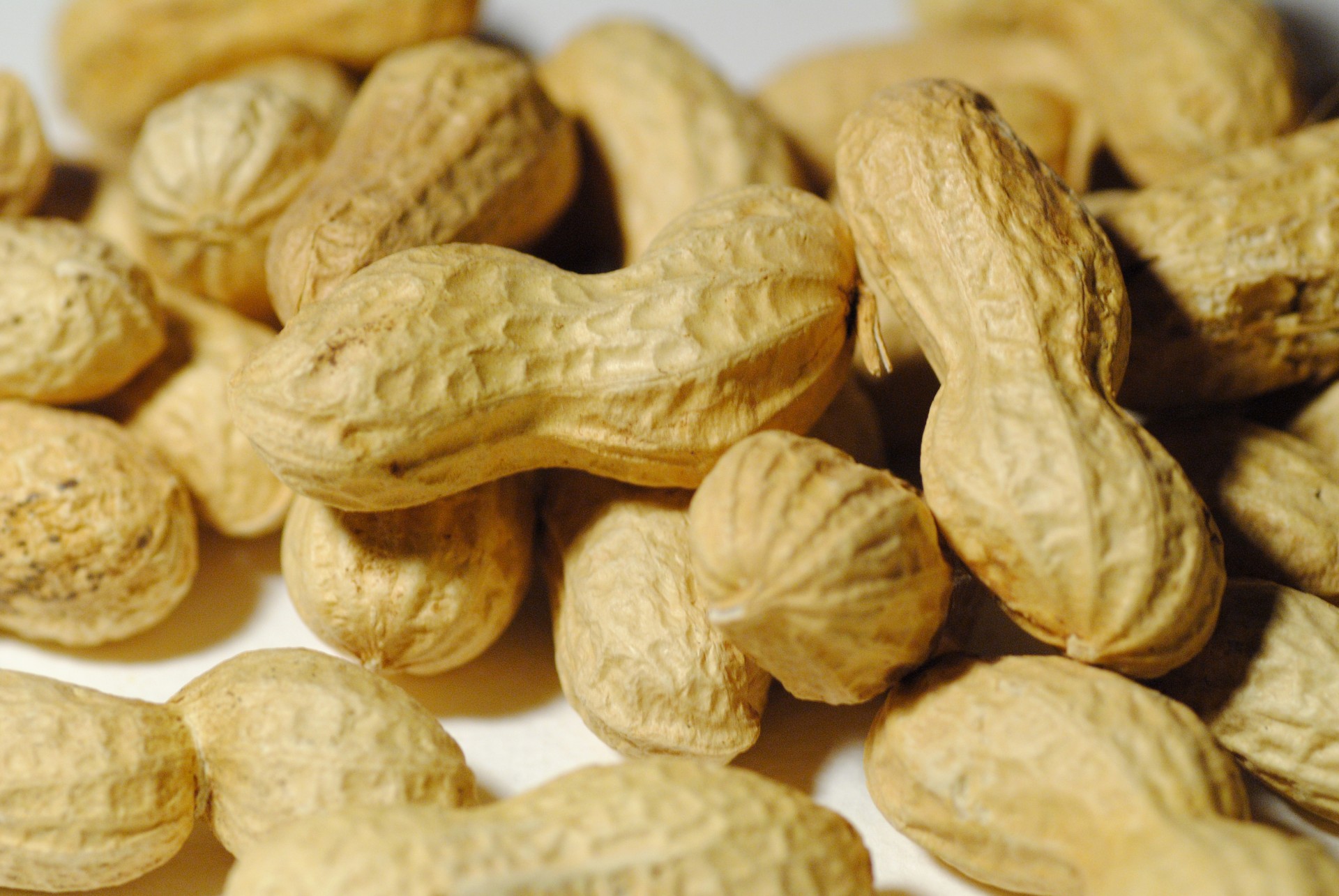
Nuts! A Childhood Memory

Image result for peanuts
When I was walking through the produce aisles at the grocery store yesterday I happened upon the peanut display.  They looked so good, and they were on sale, too, so I bought two bags.  Large bags, maybe 24 ounces.  You know how they say not to shop when you're hungry....  After I checked out and transferred my groceries from the cart to the car, I opened one of the bags and ate a few, and then a few more.  Standing there eating those peanuts reminded me of my father.

I think my Dad - Lee Doyle - liked peanuts a lot. I have 3 distinct memories involving him and peanuts.  When I was little, perhaps 3 or 4 years old, occasionally Dad would take me with him when he went to buy gas.  It was always late mornings when we went, and always to the gas station on Main Street in Mineral Ridge.  Was it Smitty's that was on the south end of the Ridge?  I remember a man would come out of the station and pump the gas.  He and Dad would visit and Dad would check under the hood.  When he was finished, he'd close the hood and go into the gas station while I stayed in the car.  The gas station was a smallish building and you had to up a number of steps to go inside.  Dad would disappear through the door, then soon emerge, hat on his head, with his hand in his sweater pocket.  Back inside the car out would come two little 5-cent bags of roasted, shelled peanuts.  And we would sit there in the car and eat them.  What a treat!

I also remember going to the Canfield Fair where there was a peanut seller with a cart full of peanuts.  Was it Eddy's?  The cart had a mound of peanuts in the center and along the sides were small brown bags of peanuts with the tops folded very carefully and particularly, all alike.  It seemed that the peanut stand was conveniently close to wherever we were going to meet everyone else.  (Did Dad plan that?)  Dad bought us a bag or two of peanuts and we stood there cracking and eating them.  I remember that he showed me the "button" - as he called it - and explained that if I pressed it, the peanut would split in half.  It always does!

When we ate peanuts at home, which was an "event" because Mom rarely bought peanuts in the shell, she would spread a large cloth on the floor in the living room, and we would all sit around it and crack our peanuts over the cloth.  Mom was such a meticulous house-keeper that she would not have wanted peanut crumbs anywhere in the house.  Peanuts do create a lot of crumbs, but they are so good!

Oh, and then there are the pistachios!  My brother Bob introduced me to pistachios.  He used to work at Beazell's in the Ridge.  One day I was riding with him in the car and he stopped and went inside.  When he came back out, he had a bag of little red things.  I didn't know what they were because I'd never seen pistachios before.  We pried them apart and ate.  Delicious!  I think that was the beginning of my love of pistachios.  You can't find the red ones anymore, but the natural ones are just as beautiful and just as delicious!

I guess I'd say peanuts are a comfort food these days.

--Nancy.

Photo courtesy of

Copyright © 2009-2018 Nancy Messier. All Rights Reserved.
Related Posts Plugin for WordPress, Blogger...